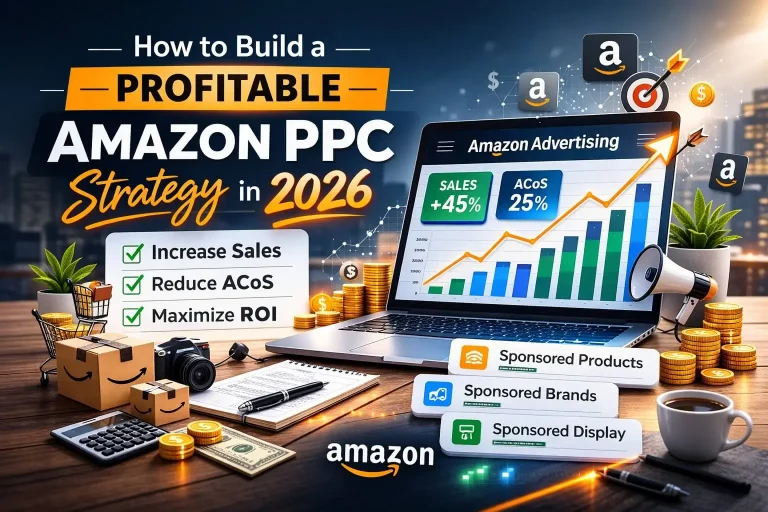
Amazon PPC Strategy in 2026 has become essential for sellers in the US marketplace. Competition is stronger than ever. Thousands of new products launch every day. Organic ranking alone is not enough anymore. Paid advertising helps products gain visibility fast. It helps drive traffic. It helps generate sales.
A profitable Amazon PPC strategy focuses on revenue and profit. It does not focus on clicks alone. Sellers must control ad spend. They must target the right keywords. They must optimize campaigns continuously. In 2026 success depends on data. It depends on smart structure. It depends on proper optimization.This guide explains how to build a profitable Amazon PPC strategy step by step.
How Amazon PPC Works?
Amazon PPC stands for Pay Per Click advertising. Sellers pay when shoppers click their ads. These ads appear in Amazon search results. They also appear on product detail pages.
Amazon uses keywords and shopper behavior to show ads. When shoppers search for products Amazon shows relevant ads. Products with better performance get more visibility.Amazon PPC supports three main goals. It increases product visibility. It increases sales. It improves organic ranking.
Why Amazon PPC Is More Important in 2026?
Amazon is more competitive today. More brands use advertising. This increases ad competition. It increases cost per click.Amazon also prioritizes performance data. Products with strong sales history rank higher. PPC helps build that sales history.
Amazon also introduced advanced targeting. These tools improve ad accuracy. Sellers who use these tools gain advantage.Ignoring PPC limits growth. It reduces visibility. It slows down sales.
Start With Deep Keyword Research
Keyword research is the foundation of Amazon PPC. Keywords connect shoppers with products. Choosing the right keywords improves profitability.
Start with Amazon search suggestions. These suggestions show real shopper searches. Use keyword research tools. Analyze competitor listings. Study competitor ads.
- Focus on buyer intent keywords. These keywords indicate purchase intent. For example buy wireless earbuds shows strong intent.
- Use long tail keywords. These keywords have lower competition. They have higher conversion rate.
- Use branded keywords. These keywords protect brand traffic.
- Strong keyword research improves performance.
Structure Campaigns Properly From the Start
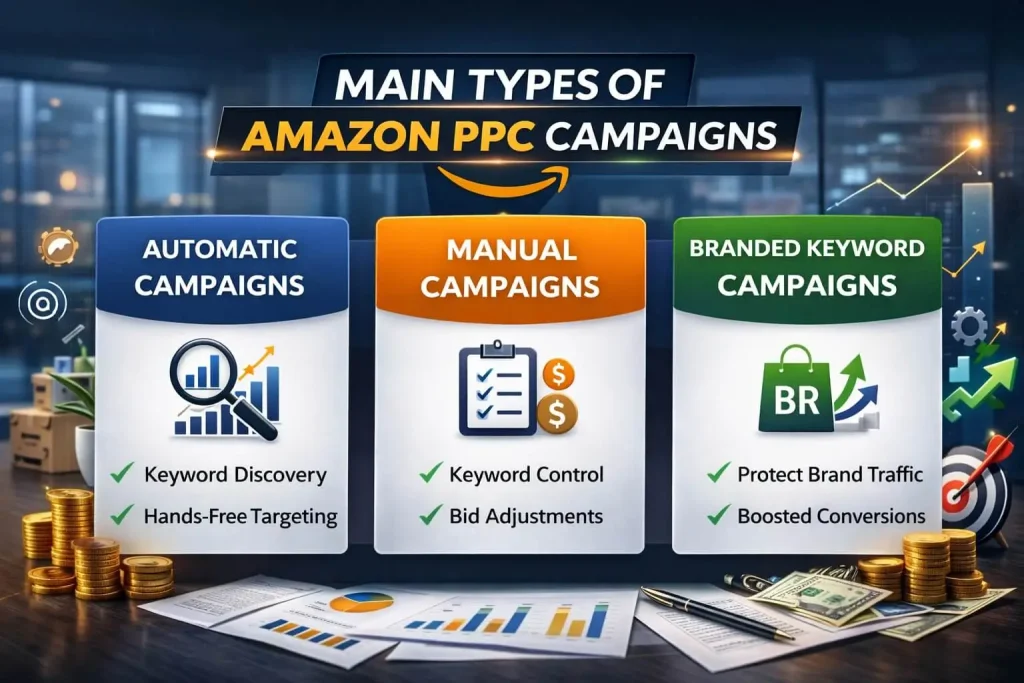
Campaign structure affects profitability. Poor structure wastes budget. Good structure improves control.Use separate campaigns for different goals. Create automatic campaigns. Create manual campaigns. Create branded keyword campaigns. Create high converting keyword campaigns.This structure improves control. It improves optimization.Automatic campaigns help discover keywords. Manual campaigns improve targeting.
Use Automatic Campaigns to Discover Profitable Keywords
Automatic campaigns allow Amazon to find keywords. Amazon uses product content. It uses shopper behavior.Start with moderate bids. Allow campaigns to run for two weeks. Collect performance data.
Review search term reports. Identify keywords that generate sales. Move those keywords into manual campaigns.Automatic campaigns help discover hidden opportunities.
Use Manual Campaigns to Improve Profitability
Manual campaigns provide full control. Sellers choose keywords. Sellers control bids.Use exact match keywords for profitable terms. These keywords provide strong conversion. You should use phrase match keywords for expansion. These keywords increase reach.Use broad match keywords for discovery.Manual campaigns improve targeting accuracy.
Optimize Listings Before Scaling Ads
Listing quality affects PPC performance. Poor listings waste ad spend. Strong listings improve conversion rate.
Optimize product title. Include primary keywords. Write clear product descriptions. Highlight product benefits.Use high quality images. Show product features. Show product usage.Add product videos if possible. Videos improve conversion rate.
Focus on Conversion Rate Optimization
Conversion rate affects ad performance. High conversion rate reduces ad cost. Low conversion rate increases ad cost. Furthermore, do the following for better conversion optimization:
- Improve product images. Use professional images. Show product clearly.
- Improve product descriptions. Answer customer questions. Highlight benefits.
- Improve product reviews. Positive reviews increase trust.
- Better conversion improves profitability.
Monitor ACoS and TACoS Regularly
ACoS measures ad cost compared to ad revenue. Lower ACoS improves profitability.TACoS measures ad cost compared to total revenue. This shows overall efficiency.Monitor these metrics weekly. Identify poor performing campaigns. Optimize bids and keywords.Healthy ACoS depends on product profit margin.Monitoring metrics protects profitability.
Use Negative Keywords to Reduce Ad Waste
Negative keywords block irrelevant searches. This prevents wasted clicks.
Review search term reports regularly. Identify irrelevant keywords. Add them as negative keywords.For example free or cheap may not convert well. Add these words as negative keywords.Negative keywords improve efficiency.They protect ad budget.
Use Sponsored Products as Primary Campaign Type
Sponsored Products ads are most effective. These ads appear in search results. They appear on product pages.These ads generate direct sales. They improve organic ranking.Focus most budget on Sponsored Products.These ads provide highest return on investment.They are essential for profitability.
Below is the corrected version in proper paragraph format. There are no hidden bullet style lines. Each section reads naturally like human written content.
Use Sponsored Brands to Build Brand Authority
Sponsored Brands ads help increase brand visibility on Amazon. These ads show your brand logo along with multiple products. This makes your brand look more professional and trustworthy. When shoppers see your brand often they begin to recognize it. This improves brand recall and trust. Sponsored Brands ads work very well for branded keywords. They also work well for category keywords. These ads help sellers dominate more space in search results. Over time this improves brand authority. Strong brand presence increases conversion rate and long term profitability.
Use Sponsored Display for Retargeting
Sponsored Display ads help retarget shoppers who already showed interest in your product. These shoppers may have clicked your listing but did not purchase. Retargeting brings these shoppers back to your product page. These customers already know your product. This increases the chance of conversion. Sponsored Display ads help recover lost sales opportunities. They also improve total campaign efficiency. Retargeting helps sellers increase conversion rate without increasing traffic cost. This makes Sponsored Display ads an important part of a profitable Amazon PPC strategy in 2026.
Optimize Bids Based on Performance Data
Bid optimization is critical for profitability. Every keyword performs differently. Some keywords generate strong sales. Some keywords generate clicks but no conversions. Sellers must increase bids on profitable keywords. This improves visibility for high performing terms. Sellers must also reduce bids on poor performing keywords. This prevents budget waste. Bid optimization requires regular monitoring. Sellers should review performance every week. Testing different bid levels helps find optimal balance. Proper bid management improves efficiency. It improves return on ad spend and overall campaign profitability.
Scale Profitable Campaigns Gradually
Scaling Amazon PPC campaigns should be done carefully. Increasing budget too fast increases risk. It can increase ad spend without improving profit. Sellers should focus only on profitable campaigns. Budget should be increased slowly. Performance should be monitored closely after scaling. This helps maintain profitability. Gradual scaling ensures stability. It prevents sudden increase in ACoS. Controlled growth improves long term success. Sellers who scale carefully achieve sustainable revenue growth and better overall performance.
Avoid Common Amazon PPC Mistakes
Many Amazon sellers lose money due to common mistakes. These mistakes increase ad cost and reduce profitability. One major mistake is targeting irrelevant keywords. These keywords generate clicks but do not generate sales. Another mistake is ignoring search term reports. These reports provide valuable insights into real shopper behavior. Ignoring listing optimization is also harmful. Poor listings reduce conversion rate. This increases advertising cost. Sellers must also use negative keywords to block irrelevant traffic. Avoiding these mistakes improves campaign efficiency and protects profitability.
Use Data Driven Optimization for Long Term Success
Amazon PPC success depends on data driven decisions. Guessing leads to poor results. Sellers must analyze performance regularly. Search term reports help identify profitable keywords. Conversion rate data helps identify listing weaknesses. ACoS and TACoS help measure profitability. Sellers must use these metrics to guide decisions. Continuous optimization improves performance over time. Data driven strategies reduce waste. They improve efficiency. Successful sellers rely on performance data. This ensures long term profitability and sustainable growth.
Amazon PPC Growth Cycle
Amazon PPC supports long term organic growth. PPC helps generate initial sales. These sales improve organic ranking. Higher ranking increases organic visibility. This brings more organic traffic. Organic traffic reduces reliance on paid advertising. This improves profit margin over time. Strong PPC performance supports organic growth. This creates a cycle of continuous improvement. Sellers who understand this cycle can build profitable and sustainable Amazon businesses.
Note: If you want to scale faster and reduce wasted ad spend, working with a professional Amazon PPC management service can help optimize campaigns, improve targeting, and increase overall profitability.
Frequently Asked Questions
Is Amazon PPC profitable in 2026?
Yes Amazon PPC remains highly profitable. Sellers who optimize campaigns properly achieve strong results.
What is a good ACoS for Amazon PPC?
Good ACoS depends on profit margin. Lower ACoS improves profitability.
How much should sellers spend on Amazon PPC?
Start with small budget. Increase budget based on performance.
How long does Amazon PPC take to show results?
Amazon PPC can generate results quickly. Optimization improves performance over time.
Which Amazon ad type works best?
Sponsored Products ads generate best results. They drive direct sales.
Future of Amazon PPC Strategy
Amazon PPC will continue to evolve in 2026 and beyond. Competition in the US marketplace will increase as more brands invest in advertising. This will make campaign optimization more important than ever. Automation will play a bigger role in targeting and bidding. Amazon is improving its algorithm to show more relevant ads to shoppers. This means sellers must focus on conversion rate and listing quality. Data analysis will also become more critical. Sellers must monitor performance metrics regularly. Continuous optimization will separate successful sellers from average sellers. A strong PPC strategy will remain essential for long term profitability and sustainable growth.
You may like to read: Beyond Borders: Addressing Challenges in Amazon’s Global Expansion.
Summing Up
Building a profitable Amazon PPC strategy in 2026 requires careful planning and consistent optimization. Success starts with proper keyword research and strong campaign structure. Sellers must optimize product listings to improve conversion rate before scaling campaigns. Performance monitoring is essential to control ad spend and improve efficiency. Data driven decisions help identify profitable opportunities and reduce waste. Amazon PPC remains one of the most powerful tools for growth in the US marketplace. Sellers who follow a structured and optimized approach can achieve sustainable sales growth, stronger organic ranking, and long term profitability.